
Essays on history, feminism, culture and the art of paying attention.
Smart, feminist, and slightly rebellious essays on history, politics, and pop culture. Paper & Glory brings big ideas out of lecture halls and into everyday life.
Paper & Glory is a space for slow thought and careful writing — for essays that notice, connect, and question. It’s about the humanities in their broadest sense: the study of people, ideas, and the stories that shape meaning. Here, history meets culture, feminism meets politics, and the personal meets the public. It began with a simple idea: that thinking shouldn’t live only in seminar rooms or academic journals. The best ideas often start elsewhere — on buses, in cafés, in the quiet of libraries — wherever someone is wondering why the world looks the way it does.
Paper & Glory is for those who believe the humanities still matter — not as a closed discipline, but as a way of paying attention. It’s about connecting the intellectual and the everyday: theory and pop culture, archives and activism, reflection and debate. At its heart, Paper & Glory values thoughtfulness over speed, depth over certainty, and connection over noise. It’s a space for ideas that take their time — and for the conviction that curiosity, properly exercised, can still change how we see the world.
I’m Eve — a writer and third-year History and Ancient History student at Swansea University, originally from South Wales. My research focuses on early medieval Wales and its connections to the global world, and my writing explores the intersections of history, feminism, class, and culture — how the past continues to shape identity, power, and the stories we tell about ourselves. I write, edit, and design everything on the site (excluding guest publications), as well as its newsletters and seasonal publications. When I’m not writing, I’m usually swimming, sketching, or reading — often with one foot in the library and the other somewhere near the sea.
Get Featured by Paper & Glory
Paper & Glory is built on conversation — between writers, readers, and anyone who believes the humanities still matter. Whether you’re a researcher, essayist, or storyteller, your voice is welcome here.
You can contribute to the main blog, which publishes shorter essays and reflections throughout the year, or to The Folio — a quarterly collection of longer pieces and creative writing that explore history, culture, and ideas in depth.
If you have something thoughtful to share, I’d love to hear from you. Whether it’s a short reflection or a long-form essay, what matters most is curiosity, clarity, and care for the craft of thinking.
Get the Newsletter
In the Margins is a fortnightly newsletter about history, culture, and the art of paying attention — essays and observations from the edges of the page, exploring how the humanities help us notice, connect, and think more deeply about the world.
Get the Magazine
The Folio is a quarterly gathering of essays on history and culture — an ongoing conversation about how ideas travel through time, shaped by the rhythm of the seasons and the patience of slow thought.
- Motherhood, Money, and Myth: The New Domestic Feminism
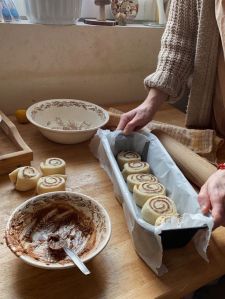 There’s a new kind of feminism making its way across social media — soft-lit, linen-draped, and faintly scented of sourdough starter. It’s less about breaking glass ceilings and more about restoring wooden floors. The women in these videos bake, garden, read, and talk gently about “slowness” and “simplicity.” They light beeswax candles, pour coffee into… Read more: Motherhood, Money, and Myth: The New Domestic Feminism
 - Lengths Between Lectures: Notes from the Goldfish Bowl
 There’s something oddly comforting about swimming alone. The rest of the day, I exist in fragments — in tabs, in messages, in conversations that start mid-thought and end mid-scroll. But in the pool, the world reduces itself to rhythm and sound: the soft clap of water, the echo of breath, the neat order of the… Read more: Lengths Between Lectures: Notes from the Goldfish Bowl
 - How to Write When you Don’t Feel Interesting
 Sometimes the blank page doesn’t look intimidating — it looks embarrassed for you.You sit there thinking, surely I need to have something profound to say before I bother writing it down. It’s a familiar kind of paralysis: you scroll through writers talking about “craft” and “projects” while you’re still trying to remember what day it… Read more: How to Write When you Don’t Feel Interesting
 - Who Gets to Learn the Past
 There’s a quiet myth that history belongs to everyone.We talk about it as a shared inheritance — something we all hold in common, regardless of background or postcode. In theory, the past is everyone’s to explore. In practice, that couldn’t be further from the truth. Who actually gets to learn the past — to visit… Read more: Who Gets to Learn the Past
 Paper and Glory